Why Sending Ad Traffic To Your Homepage Is Torching Your Conversion Rate
Your homepage is built for browsers, not buyers, and sending paid traffic there leaks conversions. Here is why a dedicated landing page turns the same ad spend into more booked calls.
✔ HIGH-VALUE KEY PRINCIPLES IN BRIEF
- 1Homepages distract, landing pages convert.
- 2One message and one action beat a menu of options.
- 3Matching the ad to the page lifts conversion instantly.
A small business can pay for 500 clicks, watch traffic pour into the website, and still see leads stay flat. The problem often isn’t Google Ads, Facebook Ads, or traffic quality. It’s the gap between the ad promise and the page experience.
Sending ad traffic to your homepage gives paid visitors too many directions and no clear reason to act. The fix is direct: match each campaign to a focused landing page, one clear offer, one next step, and fast follow-up.
Why Sending Ad Traffic to Your Homepage Torches Your Conversion Rate
Your homepage has a broad job. It introduces the company, explains the full range of services, supports branded searches, and gives different visitors somewhere to go.
A paid landing page has a narrower job. It takes one audience with one problem and moves them toward one action.
Those jobs are not interchangeable.
A contractor may offer roof replacement, storm damage repair, gutters, siding, and inspections. A financial advisor may work with retirees, business owners, executives, and families. A B2B consultant may sell several services to different industries. Sending every paid visitor to the same homepage forces each person to sort through the business before they can find the offer they already showed interest in.
That creates wasted clicks, weak message match, longer decision times, and higher cost per lead.
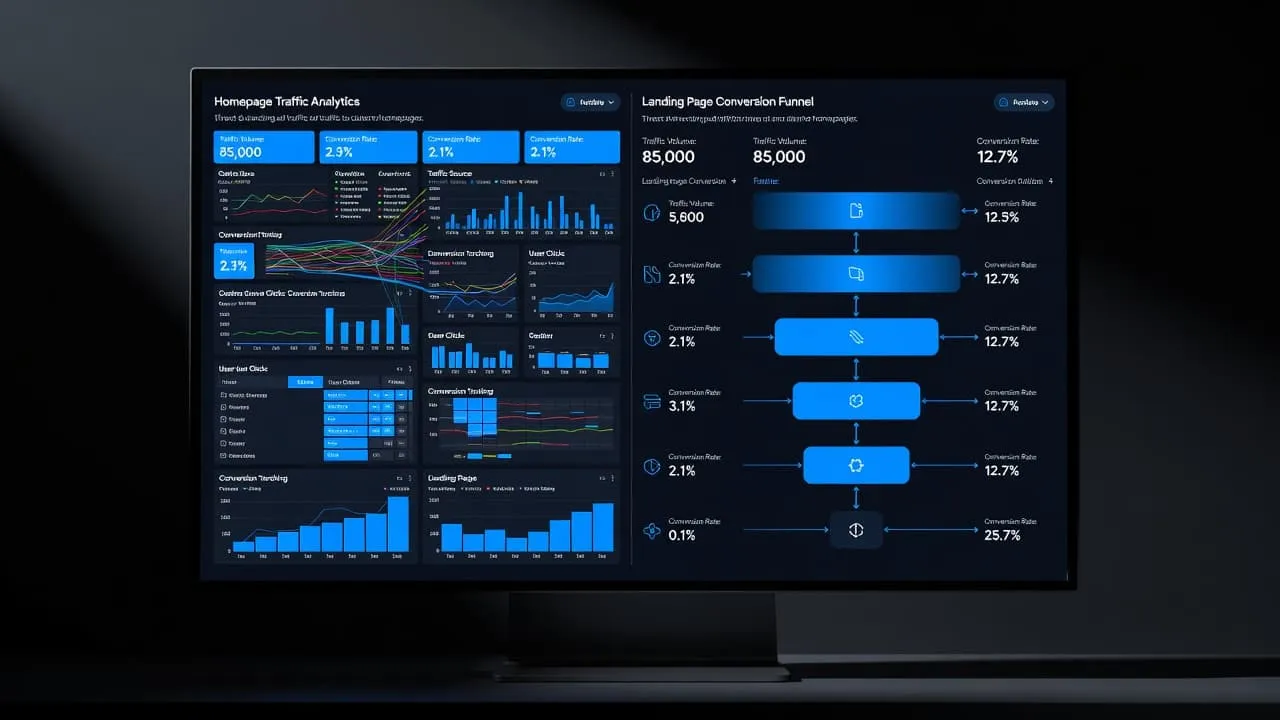
Your Ad Makes One Promise, but Your Homepage Tries to Sell Everything
Message match means the landing page continues the conversation started by the ad.
Suppose someone searches Google for “emergency plumbing repair in Dallas.” Your ad offers same-day service and a phone call. The visitor clicks and lands on a homepage with a generic headline about quality plumbing, a menu of ten services, and a blog post about water heaters.
The visitor has to stop and ask:
-
Am I in the right place?
-
Do they serve my area?
-
Do they handle emergencies?
-
How do I contact them now?
Every unanswered question creates doubt. Doubt creates delay. Delay creates back-button clicks.
The landing page should repeat the important parts of the ad immediately. Show the service, location, benefit, and offer in plain language. The headline could say, “Emergency Plumbing Repair in Dallas, Available Today.” The supporting copy should explain what happens next. The primary button should make the action obvious, such as “Call for Emergency Service.”
Consistent wording builds trust because the visitor recognizes the promise they clicked. They don’t have to translate a broad homepage into the specific solution they wanted.
The same rule applies outside home services. A consultant running ads for a financial operations assessment needs a page about that assessment. A manufacturer targeting procurement teams needs a page for that product or industry. A financial advisor promoting retirement planning needs a page that speaks to retirement planning, not every service offered by the firm.
Too Many Choices Create Friction Before the First Conversation
Most homepages contain useful information. Paid visitors don’t need all of it at once.
Large navigation menus, company history, service grids, blog posts, social links, awards, multiple phone numbers, and competing buttons can bury the next step. The visitor came with a specific need. Your page makes them do research.
That is a poor trade when you’re paying for every click.
A focused landing page can still include proof. Keep the testimonials, reviews, licenses, certifications, client logos, case studies, and service-area details. Place them around one conversion goal instead of giving each element equal weight.
Removing distractions doesn’t mean removing proof. It means making proof support one clear action.
A homepage might ask visitors to call, request a quote, view services, read the blog, join an email list, or follow the company on social media. A paid landing page should usually prioritize one primary action and one secondary option for people who aren’t ready yet.
If the primary action is a consultation, the page should make booking a consultation easy. If the business needs phone calls, the phone number should be visible on mobile. If the offer requires qualification, the form should collect enough information without becoming an interrogation.
Build Landing Pages That Turn Ad Clicks Into Qualified Leads
A strong paid landing page follows a simple structure:
-
One audience.
-
One problem.
-
One offer.
-
One primary action.
Start with a specific headline. Follow it with a benefit that answers, “Why should I care?” Add a short form or booking option near the top. Then support the decision with proof, service-area or industry details, common objections, and a clear call to action.
For a local contractor, that may mean a “Book Your Free Estimate” page for one service area. For a B2B company, it may be a “Schedule a Product Consultation” page for manufacturing decision-makers. The page should make the visitor feel that it was built for their situation, not pulled from a generic website template.
If you need help connecting ads, landing pages, CRM automation, and follow-up, the right next step is to Book a Call. A landing page cannot fix a broken sales process by itself.
Match the Page to the Campaign, Audience, and Buying Intent
Traffic source changes what the visitor needs.
Google Search traffic often carries high intent. Someone searching “commercial HVAC repair near me” is closer to action than someone who watched a Facebook video about reducing energy costs. The Search page should be direct, local, and easy to contact.
Facebook and Instagram traffic often needs more context. The page may need a stronger explanation of the problem, a clear lead magnet, testimonials, or a lower-friction assessment before asking for a sales call.
LinkedIn traffic from business decision-makers needs industry and role relevance. A page for CFOs should not use the same language as a page for plant managers. Lead with the operational problem, the business outcome, and the evidence that supports the claim.
Local Service Ads often work best when the destination reinforces trust and contact options. Make the service area clear. Show reviews, credentials, availability, and a direct phone path.
Separate pages can also support different services, cities, industries, and offers. A personal injury firm may need separate pages for car accidents and workplace injuries. A software company may need distinct pages for healthcare and manufacturing. Sending every campaign to one generic page throws away intent data you already paid to capture.
Make the Next Step Clear, Easy, and Worth Taking
The right conversion path depends on the offer and the buying decision.
A home-service company may need “Request a Quote” or “Book an Estimate.” A financial advisor may need “Schedule a Consultation.” A B2B company may need “Talk to Sales” or “Request Product Information.” A consultant may start with a free assessment or downloadable guide.
Use a short form when the visitor only needs to provide basic contact details. Use a multi-step form when qualification matters and the first step can stay simple. Put a phone number on the page when urgency is high. Add a calendar when visitors are ready to choose a time without a back-and-forth email chain.
Don’t hide the call to action at the bottom of a long page. Put it above the fold, then repeat it after key proof and objection-handling sections. The wording should describe the result, not a vague action. “Get My Repair Estimate” is stronger than “Submit.”
Test the full path on a phone. Check the form with one hand. Call the number. Book an appointment. If any step feels slow or confusing to you, it will cost leads.
Use Proof and Follow-Up to Capture More of the Demand You Paid For
Paid visitors are taking a risk. They don’t know your team yet. Proof reduces that risk.
Use customer reviews, testimonials with names and locations when permission allows, licenses, certifications, recognizable client types, before-and-after results, and relevant case studies. A contractor can show completed projects by neighborhood. A B2B company can explain the problem, process, and measurable result in a collection of client case studies.
Proof must support the offer on the page. A general five-star review is useful, but a testimonial about the exact service being promoted is stronger.
The conversion also doesn’t end when someone submits a form. Lead routing, instant text or email confirmation, missed-call follow-up, appointment reminders, and CRM tracking determine whether the lead becomes revenue.
A form notification sitting in one employee’s inbox is not a follow-up system. Leads should be assigned, contacted quickly, tracked by source, and moved through a clear pipeline. If a prospect doesn’t book immediately, automated nurture can keep the conversation active without forcing your team to remember every follow-up.
The Startize Systems approach connects ads, landing pages, and GoHighLevel workflows so lead generation doesn’t stop at the click.
How to Measure and Fix a Homepage-Based Ad Campaign
Start with the numbers that affect the business, not the numbers that look good in an ad platform.
Review campaign-level conversion rate, cost per lead, qualified lead rate, booked appointment rate, close rate, and revenue. Clicks tell you that someone visited. They don’t tell you whether the campaign produced a customer.
To compare a homepage against a focused landing page, keep the test clean. Use similar budgets, the same campaign objective, consistent audience settings, and separate tracking. Change one major variable at a time. Landing page split testing works only when the result can be connected to a meaningful change.
Before blaming traffic, check the basics:
-
The form submits correctly on mobile.
-
The thank-you page loads.
-
Phone calls are tracked.
-
The offer is visible without scrolling.
-
The page loads quickly enough.
-
The headline matches the ad.
-
The service area is clear.
-
Leads reach the right person.
-
Missed calls receive follow-up.
-
Appointment and revenue data return to the CRM.
A high click-through rate with few leads usually points to a page or offer problem. Plenty of leads with poor sales points to qualification, follow-up, or sales execution. Read the funnel in order.
Know When a Homepage Can Still Be the Right Destination
A homepage may work for branded searches, broad discovery campaigns, or visitors who already know the company. It can also work for a very simple business with one core offer and one audience.
That is the exception, not the default for cold paid traffic.
If someone searches for your company by name, they may want the homepage. If someone clicks an ad for a specific service, industry solution, location, or offer, the destination should usually be just as specific.
The decision rule is simple:
If the ad targets a specific problem, service, audience, or offer, send the visitor to a page built around that same detail.
Turn Conversion Data Into Better Ads, Pages, and Sales Conversations
Use funnel data to identify the actual leak.
If impressions are high but clicks are low, improve the ad, targeting, offer, or keyword selection. If clicks are strong but leads are weak, fix message match, page structure, speed, trust, and the conversion path. If leads are plentiful but sales are poor, review qualification, lead quality, response time, follow-up, and the sales conversation.
Track the full path from ad source to closed revenue. A cheap lead is not a good lead if nobody answers the phone or the sales team can’t close the opportunity.
Marketing decisions should connect to pipeline. That means tracking which campaign produced the lead, which page converted the visitor, whether the appointment happened, and whether revenue followed. Anything less gives you partial data and encourages bad decisions.
Stop Making Paid Visitors Search for the Offer
A homepage gives visitors options. A focused landing page gives ad traffic a reason to act.
That difference affects conversion rate, cost per lead, lead quality, booked appointments, and revenue. Map every important campaign to a matching page with one offer, one primary call to action, strong proof, and fast follow-up.
If your ads, website, and sales process aren’t working together, Book a Call. The click is only the beginning. Your system has to turn that click into a conversation.