Back to insight logs
Ad Systems
UGC-Style Video Ads: Why Contractor Ads Convert Better When They Look Homemade
✔ HIGH-VALUE KEY PRINCIPLES IN BRIEF
1
Native-looking video blends into the feed and earns attention.
2
Real job-site footage builds trust polish can't.
3
Authenticity converts better than production value.
A polished commercial can make your contracting company look established. It can also make you look like every other company buying polished commercials. UGC-style video ads work because they feel closer to a recommendation from a real person who understands the homeowner's problem.
That matters when someone is deciding who gets access to their home, their budget, and their family. The goal isn't more views. The goal is more qualified leads, booked estimates, and closed jobs. Here's what makes homemade-looking contractor ads work, how to produce them, and how to measure whether they make money.
Why UGC-Style Video Ads Convert Better for Contractors
UGC-style video ads are short videos that look and sound like regular people created them. A contractor, employee, customer, or paid creator speaks directly to the camera in a real setting. The video may be recorded on a smartphone at a job site, in a truck, or inside a customer's home.
That format removes some of the resistance people feel toward traditional ads. Viewers know they're watching an advertisement, but the message doesn't feel like a staged commercial. It feels like a person explaining what happened and what to do next.
Contracting is a trust-heavy purchase. Homeowners want to know:
Will this company show up?
Will the crew protect my property?
Will the quote change halfway through the job?
Does the team know how to solve this specific problem?
Will someone answer the phone after I submit the form?
A homemade-looking video can answer those questions faster than a logo animation and a stock image of a smiling family.
The style also fits how people consume video on Meta, Instagram, TikTok, and YouTube. A phone-recorded clip can interrupt scrolling because it looks different from a standard ad. The viewer sees a person, a real location, and a problem that may look familiar.
The video can feel homemade. The message cannot feel accidental.
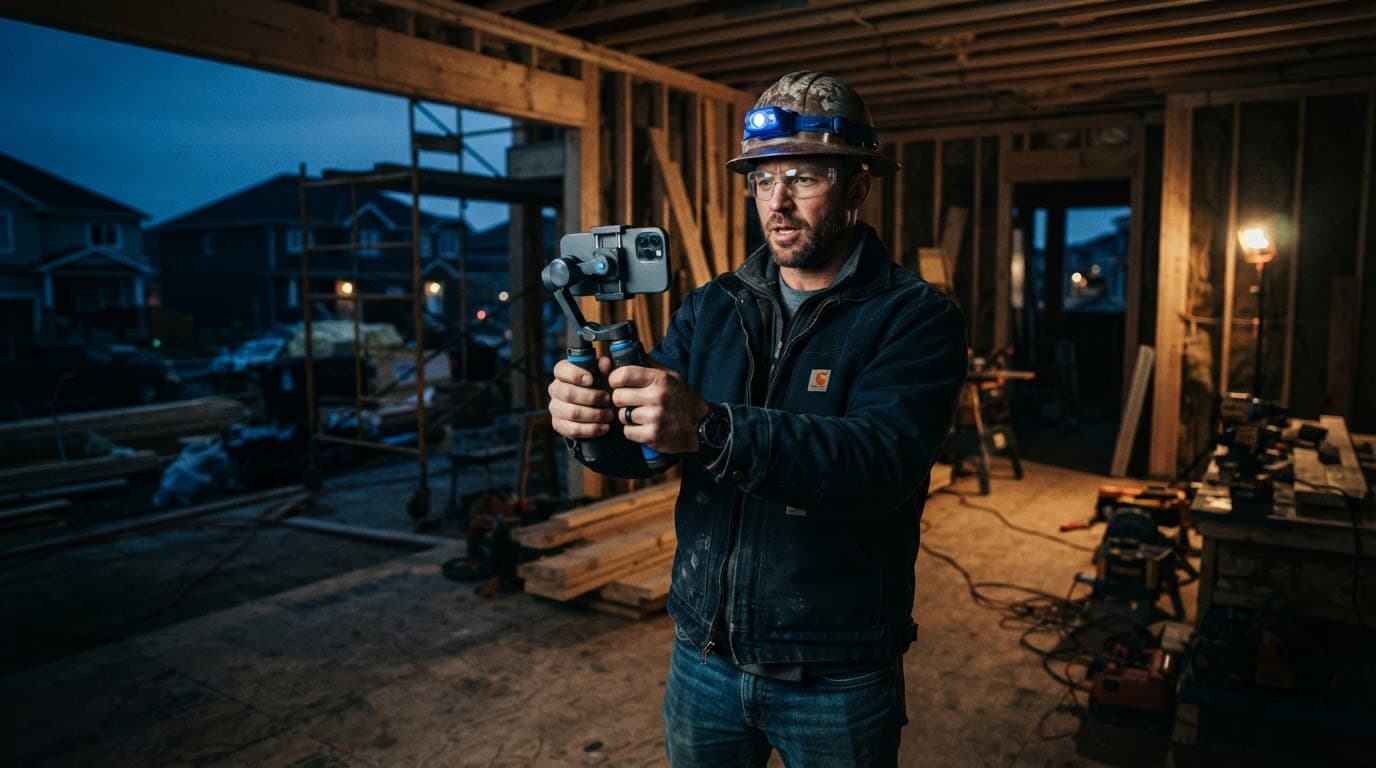
### Homeowners Trust Real People More Than Perfect Commercials
Natural speech creates credibility. So do work clothes, visible tools, a partially finished job, and the normal noise of a working business.
A roofing contractor standing beside an active repair can explain more in 20 seconds than a generic voiceover can explain in 60. An HVAC technician can point to the failed component. A remodeling contractor can walk through the reason a cabinet layout changed.
Minor imperfections help when they feel natural. A pause, a quick correction, or a slightly uneven camera angle can make the person appear real. These details show that the message wasn't built in a studio with five rounds of approval.
Homemade doesn't mean careless. The video still needs clear audio, decent lighting, accurate claims, and a focused message. Don't film with loud machinery drowning out every word. Don't show a dangerous work area. Don't make promises about savings, timelines, or warranties that your company can't support.
The right standard is simple: human presentation, professional substance.
A contractor ad can look informal while still showing a clean uniform, a safe job site, a real service area, and a clear next step. That combination feels familiar without damaging trust.
A Personal Story Makes an Invisible Service Easier to Understand
Most contractor services are invisible before the work begins. A homeowner can't see a roofing leak inside the structure. They may not know why an HVAC system keeps short-cycling. A basement flood can hide damage behind drywall and flooring.
Video gives the contractor a way to make the problem visible.
A useful story has four parts:
The customer noticed a problem.
The team found the cause.
The team completed a specific repair or installation.
The customer received a clear result.
For example, a contractor might say, "This homeowner noticed a ceiling stain after the last storm. We found damaged flashing around the chimney, replaced it, and repaired the interior damage before the leak spread."
That's stronger than "We provide high-quality roofing services."
The same structure works for a failed HVAC system, a flooded basement, or an outdated kitchen. Specific details give the viewer something to recognize. They also give the sales team a better lead when the person submits a form or calls.
A relevant plumbing contractor PPC case study shows why testing the message matters. Different ad copy can produce different conversion results, even when the audience and service stay similar. The creative earns attention, but the words qualify the lead.
What Makes a Contractor UGC Video Ad Work
A good contractor video has a simple operating structure:
The first seconds identify a painful problem.
The middle provides proof and explains the solution.
The ending gives the viewer one action.
That's the whole job. Don't force six services, three offers, and every trust badge into one 30-second clip.
A single video should promote one service to one audience. A roof replacement ad for homeowners with storm damage needs a different hook than a drain cleaning ad for people with an emergency backup.
The same creative can run across Meta, Instagram Reels, TikTok, and YouTube Shorts. Adjust the caption, placement, and call to action when needed, but don't overcomplicate production. Vertical footage, readable captions, and a strong opening travel well across these channels.
Start With a Local Problem in the First Three Seconds
The opening line needs to sound like something a homeowner would say.
Try:
"Your roof can be leaking before you see a stain on the ceiling."
"If your energy bill jumped this summer, check your attic insulation."
"That water heater may be telling you it's about to fail."
"Homeowners in Phoenix, check your AC before the next heat wave."
"If your basement smells musty after rain, don't cover it with air freshener."
These hooks identify a problem without wasting the first seconds on a logo or company history.
Name the service area when it sounds natural. Local relevance can help the viewer decide whether the message applies to them. Don't stuff city names into every sentence. One clear mention is enough.
Avoid vague openings such as "Are you looking for quality service?" That line says nothing. Avoid fear-based claims such as "Your roof will collapse tomorrow" unless you have evidence for the warning. Clickbait may produce attention, but bad-fit leads create expensive follow-up.
Show Proof Through Jobs, Customers, and Clear Outcomes
Proof has to support a specific claim.
If you claim faster repairs, show a technician explaining the repair process. If you claim cleaner installations, show the protected work area and finished result. If you claim better communication, let a customer describe how updates were handled.
Useful proof includes:
Job-site walkthroughs
Before-and-after footage
Customer testimonials
Team introductions
Short process videos
Permit details when relevant
Warranty information
Review screenshots
Get written permission before filming customers, homes, vehicles, or testimonials. Don't use a customer's face or review in an ad because the content appeared on your profile. Advertising use requires clear consent.
The proof doesn't need to be dramatic. A customer saying, "They called when they said they would and cleaned up every day" may be more useful than a broad statement about excellence.
For a wider view of measurable campaigns, review these business growth case studies. The useful question isn't which campaign received the most attention. It's which system produced qualified opportunities and revenue.
End With One Simple Action
Every video needs one primary call to action.
Ask the viewer to request an estimate, call the office, send a message, or book an inspection. Don't ask them to call, download a guide, follow the page, and visit three service pages at the same time.
The landing page must match the ad. If the video promotes water damage restoration, send the viewer to a restoration page or a short estimate form. Don't send them to a generic homepage with ten navigation options.
If you need help building the ad, landing page, and follow-up process together, you can Book a Call.
How to Make Homemade-Looking Ads Without Looking Unprofessional
Start with a smartphone, a quiet location, and one person who can explain the service without sounding scripted. The owner isn't always the right speaker. A technician, project manager, or satisfied customer may communicate the problem better.
Record vertically. Keep the speaker near a window or use a small light. Put the phone close enough to capture clean audio, and use an inexpensive wireless microphone if the job site is loud.
A clean background helps. So does a visible truck, uniform, tool, or active project. These details establish context without requiring a long company introduction.
Add captions because many people watch with sound off. Cut long pauses, repeated sentences, and unrelated sections. Keep the natural delivery. Don't edit the video until it sounds like a national commercial.
Use a Simple Script That Sounds Like a Conversation
Use this structure:
Call out the problem.
Explain why it matters.
Share what your team does.
Provide proof.
Give the next step.
A kitchen remodeling contractor could say:
"Still dealing with a kitchen layout that wastes half your counter space? We help homeowners redesign the room around how they actually cook. On this project, we moved the sink, added storage, and opened the walkway without changing the home's footprint. If you're planning a remodel in Austin, request an estimate through the link."
That is enough. Short sentences are easier to deliver and easier to edit.
Don't read every word like a news anchor. Write a few points, then record several takes. Speak to one customer, not a broad audience. Picture the homeowner standing in front of you with the problem you solve.
Keep the Production Fast, Clear, and Easy to Repeat
The best contractor content usually comes from work already happening. Build a repeatable routine around real jobs, seasonal concerns, customer questions, common repair mistakes, and recent reviews.
Film several short clips during one visit:
A problem explanation
A technician introduction
A process clip
A finished result
A customer comment, with permission
One job can produce enough material for multiple ads and organic posts. Keep a simple list of topics so the team isn't inventing ideas at the last minute.
Use vertical framing, clear captions, strong audio, and a clean background. Show the company name or service area when it fits naturally. Check every clip for personal information, unsafe conditions, and claims that need support.
Your production system should be easy enough to repeat every week. A single perfect video won't fix a weak pipeline. Ten clear videos give you more hooks, more proof points, and more data.
How to Test Contractor Video Ads and Turn Leads Into Jobs
Don't change the audience, budget, offer, speaker, hook, and landing page at the same time. You won't know what caused the result.
Start with a controlled test. Keep the service area and audience steady. Test two or three hooks. Then test a different speaker, proof point, or offer after you have enough data.
Track the entire path:
The viewer sees the ad.
The viewer clicks or calls.
The form captures the lead.
The CRM records the source.
The team responds.
The lead books an estimate.
The estimate becomes revenue.
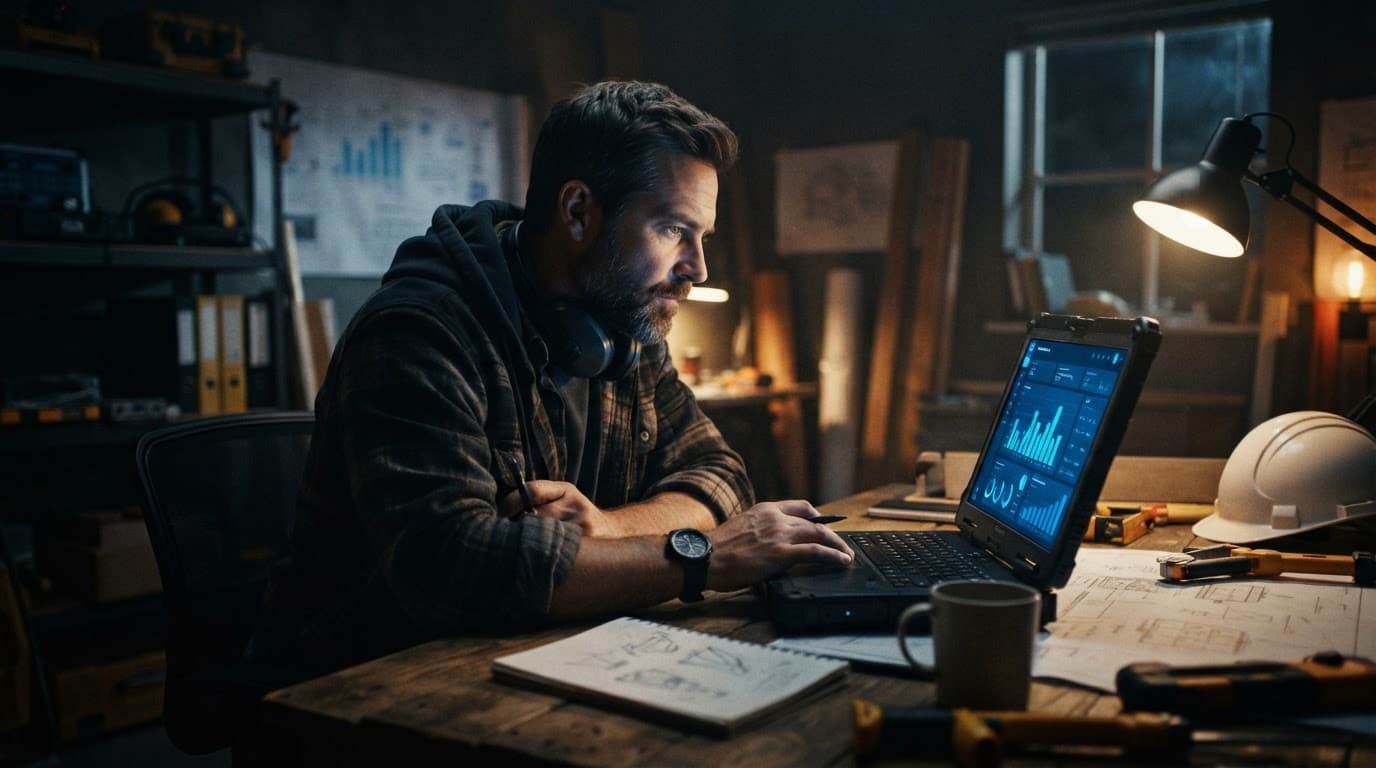
### Measure Leads, Booked Estimates, and Revenue, Not Just Views
Views are useful for judging reach. They don't tell you whether the campaign is producing work.
Track:
Thumb-stop rate
Three-second views
Average watch time
Click-through rate
Cost per lead
Qualified lead rate
Booked estimate rate
Close rate
Revenue by campaign
A cheap lead isn't automatically a good lead. Someone outside your service area, looking for a job, or requesting work you don't offer can lower the cost per lead while damaging the sales pipeline.
Use call tracking for phone leads. Use form attribution for website submissions. Connect both sources to the CRM so you can see which ads create appointments and closed jobs.
The numbers will also tell you where the problem sits. Low watch time points to weak creative. Strong clicks with poor form completion points to a landing page issue. Qualified leads that don't book may point to slow response or a weak offer.
A junk removal Google Ads case study shows why conversion rate and cost per conversion are more useful than raw impression totals. The same rule applies to contractor video ads. Attention is only the first checkpoint.
Fix the Follow-Up Process Before Increasing Ad Spend
A strong video ad can't rescue a missed call.
Respond to new leads quickly. Send an immediate text and email confirmation. Call while the request is still fresh. Ask a few qualification questions, confirm the service area, and offer a clear appointment window.
Set reminders before the estimate. Assign ownership inside the sales process. Record the outcome so future campaign decisions use real revenue data.
Paid ads, local search, Google Business optimization, and CRM automation shouldn't operate as separate projects. They are connected parts of the same lead-generation system. The ad creates demand. Search captures existing demand. Follow-up turns inquiries into appointments.
More ad spend only multiplies the leaks if the system loses leads after the click. The lead generation insights from Startize Systems cover the operational side of ads, local search, and follow-up automation.
Homemade-Looking Videos Need a Real Business Behind Them
UGC-style video ads convert better for contractors because they feel direct, familiar, and believable. A real person at a real job site can explain a problem faster than a polished commercial packed with branding.
The standard is not low quality. It is clear proof, honest language, useful footage, and one next step. Start with one service, one audience, and a small set of videos. Then judge the campaign by qualified leads, booked estimates, and closed revenue.
If your ads generate inquiries but your process loses them afterward, Book a Call to build the creative, tracking, and follow-up system together.

Jackson Kolinski
Based in Wisconsin, Jackson designs and integrates direct-response acquisition pipelines, on-page SEO schema algorithms, and automated customer relationship messaging workflows under strict ROI frameworks.
Want your CRM to run this mathematical sequence?
Schedule our 90-second system audit and book your free direct operational review session. No complex pitch. Just real coordinates.